
'They become heroes because of their actions.'

India-China border trade via Uttarakhand's Lipulekh Pass is set to resume on August 1 after a gap of more than six years, with the neighbouring country granting permission to 20 Indian traders to visit Purang (Taklakot), according to officials.

Reliance Industries shares rose over 1 per cent after the company reported record quarterly core profit and EBITDA for the June quarter, driven by strong performances in its oil-to-chemicals and telecom businesses.

France defender Jules Kounde has brushed aside Spain star Lamine Yamal's comments that Les Bleus are not favourites ahead of La Roja at the FIFA World Cup 2026, saying the remarks do not bother him.

Iranian Foreign Minister Abbas Araghchi has revealed the intense psychological pressure faced by Tehran's diplomatic delegation during peace negotiations with the United States, recalling a direct exchange with US President Donald Trump's Middle East envoy, Steve Witkoff, where he questioned the envoy about the constant military threats.

Indian boxers Jadumani Singh and Preeti Pawar have secured their spots in the quarterfinals of the Commonwealth Games boxing competition. Jadumani Singh defeated Pakistan's Sumama Rehman with a unanimous 5-0 decision, while Preeti Pawar advanced via Referee Stop Contest against Deborah Mtenje of Malawi. However, Aditya Pratap faced an early exit after losing his opening bout.

BJP MP Kangana Ranaut and Cockroach Janta Party (CJP) spokesperson Saurav Das have engaged in a sharp verbal exchange, escalating the controversy surrounding Ranaut's 'Generation gutter' remarks aimed at young protesters.

For India, the guiding principle should remain clear: Engage Bangladesh as a sovereign nation and society rather than through the prism of any individual leader or political party, suggests Manoj Mohanka.

Early data from the World Cup indicates that sportswear giant Adidas is currently gaining a significant advantage over rival Nike in brand visibility and sales. Adidas, an official sponsor, is seeing a substantial surge in apparel spending and foot traffic, particularly driven by jersey sales. While Nike's business is also growing, it is being outpaced by Adidas, which appears to have a more resonant product offering. Nike, facing declining market share and intense competition, is relying on the World Cup for a boost, though its footwear presence remains strong.

The internecine war within the Trinamool Congress took a new turn on Thursday with "party treasurer" Aroop Biswas writing to a bank seeking restrictions on the operation of the party's accounts, citing uncertainty over its legitimate leadership amid rebellions by MLAs and MPs.

US President Donald Trump announced the 'reinstatement' of an 'Iranian Blockade' in the Strait of Hormuz, stating the US would charge a 20 per cent levy on transiting cargo for providing security, while Iran warned against any US interference, reaffirming its authority over the critical waterway.

The Avengers: Doomsday teaser trailer has dropped, revealing an ambitious, potentially overcrowded multiverse saga featuring Doctor Doom, returning heroes, and universe-colliding stakes that could define the future of the MCU.

The Star Wars franchise as a whole has struggled creatively in recent years, and sadly, Grogu's cuteness alone is not enough to save the day, asserts Sreeju Sudhakaran.

Lachit Borphukan is revered as one of Assam's greatest military commanders and a symbol of courage, patriotism and selfless leadership.
Markets face risk of a prolonged bear phase as oil shocks and geopolitical tensions test inflation, growth and investor confidence globally, points out Debashis Basu.

Argentina has advanced to the World Cup final after defeating long-time rivals England with two late goals, sparking widespread celebrations across the country, particularly in Cutral Co, Patagonia, home to a new 85-foot statue of Lionel Messi.

India's passenger vehicle industry is poised for a record-breaking year in 2026, propelled by robust dispatches in the first half of the calendar year and strong demand for utility vehicles, despite facing several economic challenges.
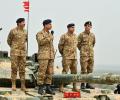
Lieutenant General Syed Aamir Raza's loyalty to Field Marshal Asim Munir during the turbulent times appears to have stood him in good stead, points out Rana Banerji, who headed the Pakistan desk at R&AW.

Indian benchmark indices Sensex and Nifty advanced in early trade, driven by renewed foreign fund inflows and a significant drop in crude oil prices to pre-war levels, signalling an uptrend in the market. Track Sensex, Nifty on July 7, 2026.

The Supreme Court has agreed to urgently hear the bail plea of advocate Surendra Gadling, who has been incarcerated for seven-and-a-half years in the 2018 Elgar Parishad-Maoist links case, with the hearing scheduled for next week.

A PL Capital report projects India's LPG subsidy bill to exceed Rs 1 lakh crore in FY27, creating a significant Rs 70,000 crore gap over the Union Budget's Rs 30,000 crore allocation, driven by the government and OMCs absorbing higher fuel and LPG price increases.

US Republican Senator Lindsey Graham, a prominent ally of former President Donald Trump and an influential voice on American foreign policy, has passed away at 71 following a 'brief and sudden illness', leaving a significant void in Washington's political landscape.

The once promising YRF Spy Universe, which delivered Bollywood's first Rs 500 crore grosser with Pathaan, is now grappling with an uncertain future as recent releases like Alpha and War 2 fail to ignite the box office.

June-July 1999 saw some of the most bitterly fought battles in the Kargil War. Colonel Gaurav Chaturvedi looks back on those days -- and the extraordinary saga of the men he fought alongside.

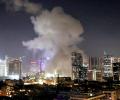
Tensions in West Asia have dramatically escalated as Israel launched targeted military operations against Iran, triggering widespread blasts across strategic cities, following earlier Iranian projectile attacks on Israel.

Chief Justice of India Surya Kant highlighted the rapid integration of Artificial Intelligence into arbitration practices, expressing concerns about its accuracy, authenticity, and ethical use. He stressed the need for mandatory disclosure when generative AI is used in preparing legal documents and reports, advocating for shared standards to manage deepfakes and AI-generated material. The CJI also encouraged embracing AI for efficiency in tasks like e-discovery while preserving core arbitration principles.

It's only July but the South Korean drama scene is brimming with action and adrenalin.

The Trump administration maintains the US is 'not at war' with Iran, despite military engagement reaching a critical legal threshold under the War Powers Resolution, potentially leading to a confrontation with Congress.

Interim All India Tennis Association (AITA) President Chintan Parikh has accused court-appointed administrator Justice (Retd.) Gita Mittal of financial exploitation and procedural bias, alleging that her actions are draining the sports body's finances and compromising its autonomy.

Prem Panicker's Must Read Blog On The Gulf War.
US President Donald Trump on Friday (local time) announced a three-day ceasefire between Russia and Ukraine, noting that the temporary truce coincides with Russia's Victory Day celebrations commemorating the then-Soviet Union's role in World War II.

Wolfgang Petersen's Troy is grand, star-studded and visually impressive, but it never quite lives up to the epic that inspired it.
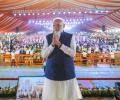
This is the time for India to plan forward fully, with the goal of Atmanirbharata, and energy security. The Persian Gulf is no longer a reliable source, points out Rajeev Srinivasan.

Olympic medallist Mirabai Chanu secured her third consecutive Commonwealth Games gold, breaking records in the women's 48kg weightlifting. Rishikanta Singh and Raja Muthupandi also added silver medals, contributing to India's growing tally at the Games.

The question nobody seems to ask is why a democracy should be silent when many of its citizens are concerned about the way the US is deviating from its traditional ways of consultation, cooperation and collaboration and moving away from traditional allies, asks Ambassador T P Sreenivasan.

A derogatory 'cockroach' remark by Chief Justice Surya Kant during a Supreme Court hearing inadvertently sparked a nationwide student movement, transforming an insult into a powerful symbol of protest that led to Union Education Minister Dharmendra Pradhan's resignation.

Companies are already diversifying sourcing, raising prices, and reworking operating models as the disruption drags on.

It was left to an incensed Gen Z to show the rest of India that enough was enough, and that the time had come to shatter the fear psychosis generated by the government's authoritarian approach to protests and criticism, points out M R Narayan Swamy.

The United States has paused a proposed USD 14 billion arms sale to Taiwan due to concerns about maintaining sufficient munitions for potential conflicts, particularly in light of the ongoing situation with Iran.
Disciplined investors who ignore short-term fear build significant long-term wealth, notes Ramalingam Kalirajan
